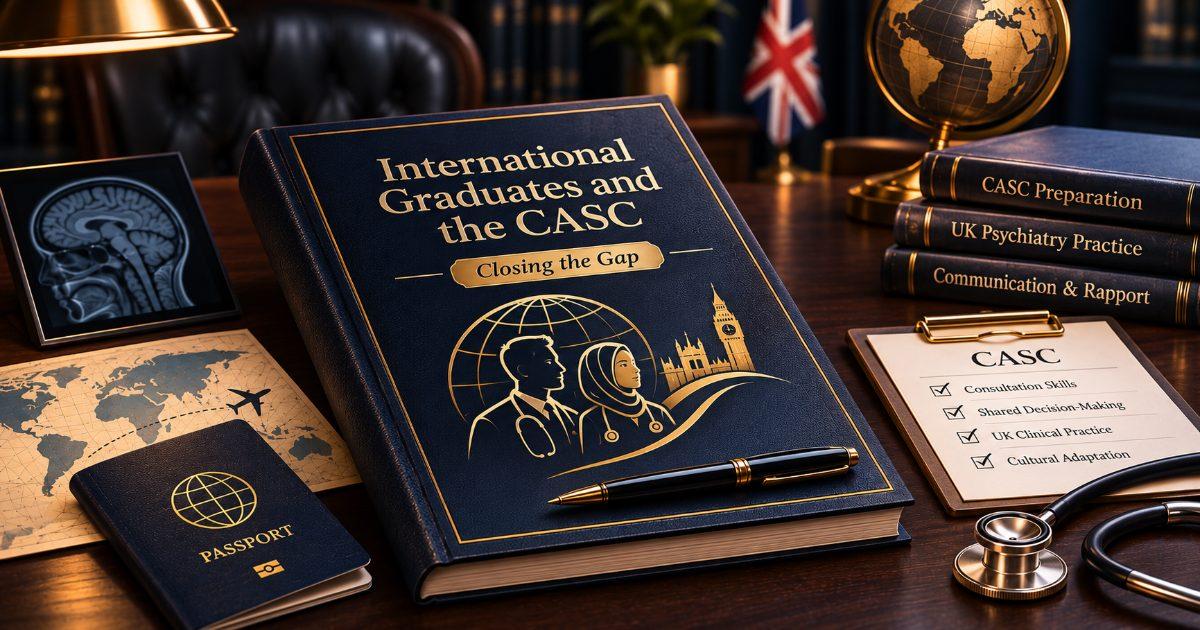
International Graduates and the CASC: Why the Gap Exists and What Closes It
Why international medical graduates pass the CASC at lower rates, from a former examiner: what the evidence shows, and 5 differences preparation can close.
Original editorial analyses, medicolegal frameworks, and institutional insights by Dr Ahmed Abouelghit.

Why international medical graduates pass the CASC at lower rates, from a former examiner: what the evidence shows, and 5 differences preparation can close.

A psychiatric report can be accurate and still fail in court. The reason is usually simple: it answers the clinical question, when the court asked a legal one.

Most advice on passing the CASC is a list of tips. Tips help, but only once you understand what the mark is made of. Candidates who know how the exam is scored prepare differently, and they make different decisions in the room when a station starts to go wrong. There is no fixed pass mark for the CASC. This guide explains how the College decides who passes, what examiners actually mark in each station, and five habits shared by candidates who pass.

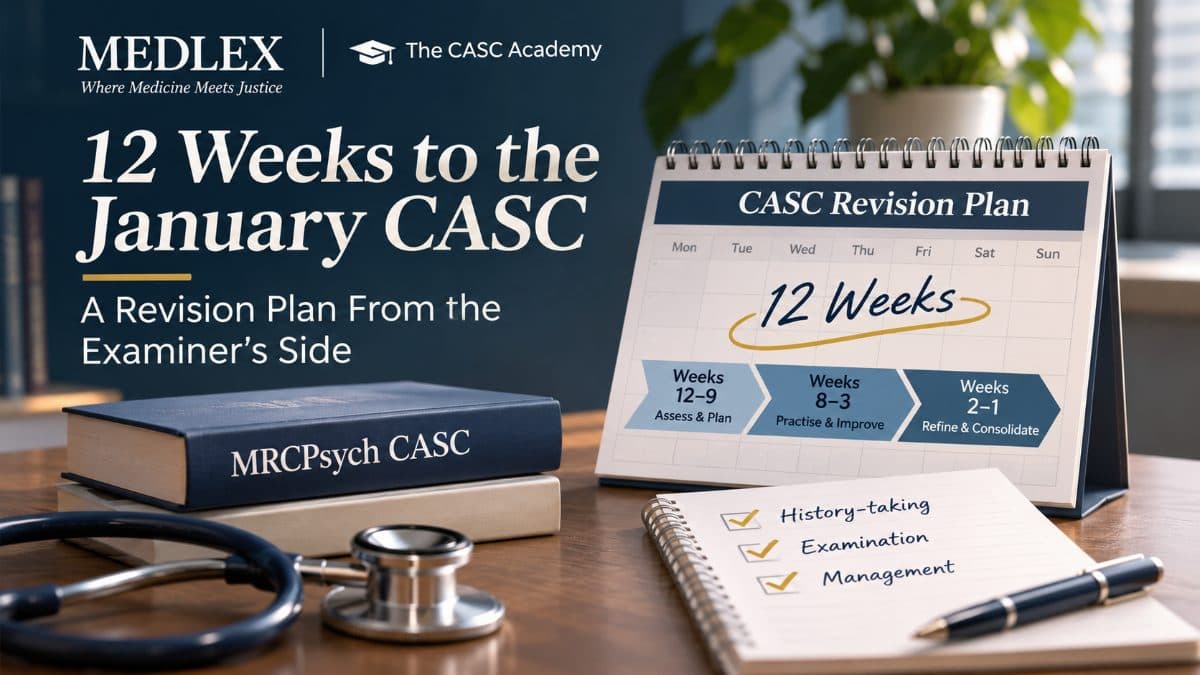
The January 2027 CASC starts on 19 January, 12 weeks from now. Here is a 12-week revision plan in 3 phases from a former examiner: find out where you are, practise out loud with feedback, then sharpen rather than cram.

With an overall pass rate of only 52.27% in September 2026, failing the CASC is painfully common. Here is what a former examiner urges you to evaluate before reflex-booking the January 2027 sitting.

Most candidates who fail the MRCPsych CASC know the clinical guidelines—what they haven't mastered is using that knowledge out loud against the clock. A former examiner explains the format, eligibility, scoring, and 8 core skills tested in January 2027.

Courts across the region rely on psychiatric opinion every day, yet few clinicians are trained to give it. Why the gap exists, and why MedLex was built to close it.